
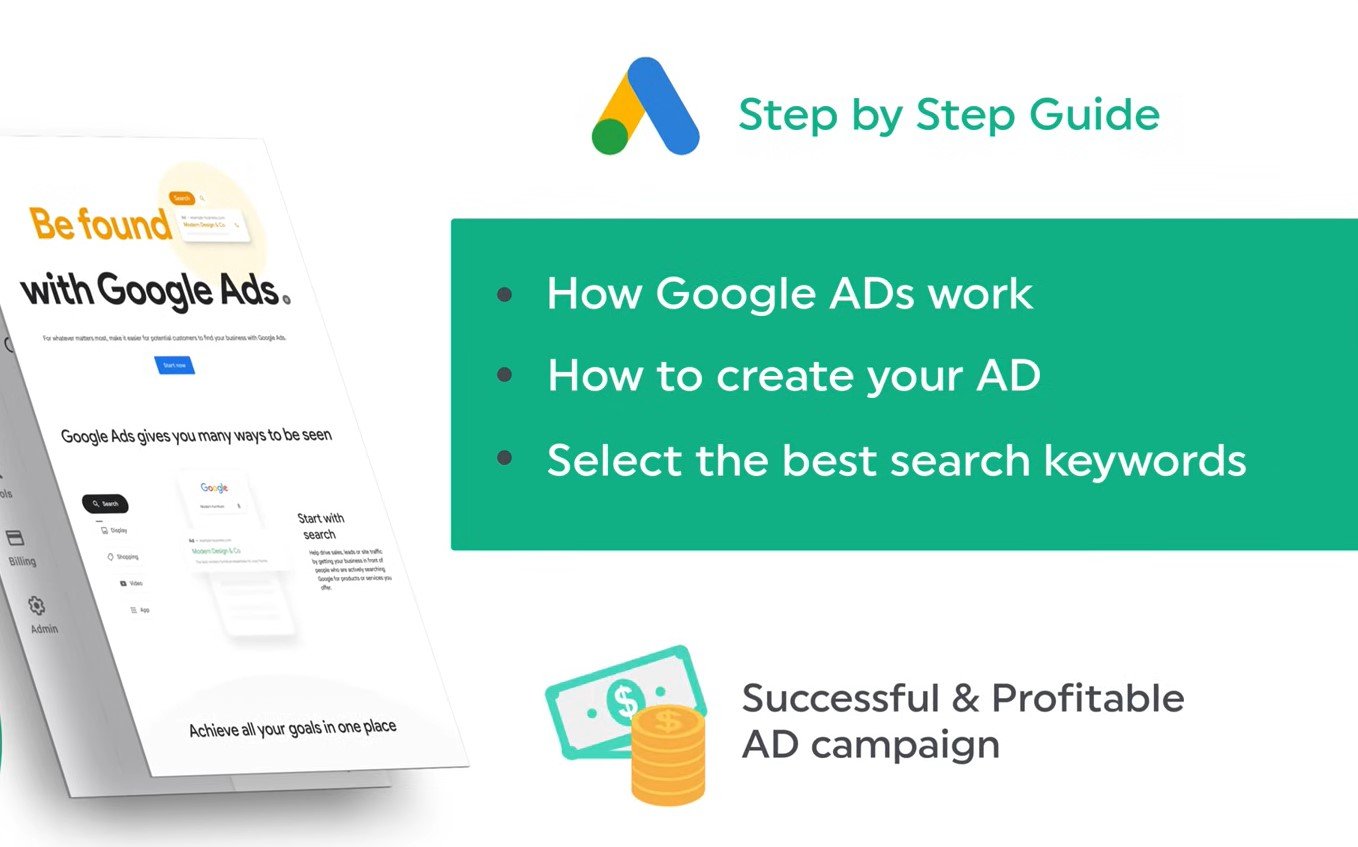
Alright, let’s dive into how to use Google Ads in 2025. This tutorial will cover the fundamentals to get you started with running successful campaigns. Keep in mind that while the core principles remain, the Google Ads interface and specific features might have minor updates by then.
I. Understanding the Basics of Google Ads:
- What is Google Ads? Google Ads is an online advertising platform developed by Google where advertisers bid to display brief advertisements, service offerings, product listings, or videos to web users. It operates on a pay-per-click (PPC) model, meaning you only pay when someone clicks on your ad.
- How it Works: When someone searches on Google for terms related to your business, Google’s algorithm determines which ads to show based on factors like your keywords, bids, ad quality, and ad extensions.
- Key Components:
- Campaigns: Organized around a specific advertising goal (e.g., website traffic, leads, sales).
- Ad Groups: Contain a set of related keywords and ads.
- Keywords: The words and phrases you bid on that trigger your ads to appear.
- Ads: The text, image, or video creatives that users see.
- Bids: The maximum amount you’re willing to pay for a click on your ad.
- Quality Score: A rating of the quality and relevance of your keywords, ads, and landing page. It impacts your ad rank and cost per click (CPC).
- Ad Extensions: Additional information about your business that can appear with your ads (e.g., phone number, website links, location).
II. Setting Up Your Google Ads Account:
- Go to ads.google.com: Click “Start now” or “Sign in.”
- Google Account: You’ll need a Google account to proceed. If you don’t have one, you’ll be prompted to create one.
- Initial Setup (Smart Campaign – Optional for Beginners): Google might initially guide you through setting up a “Smart Campaign,” which is a simplified version. While easy to start, it offers less control. For a full understanding, you’ll eventually want to switch to “Expert Mode.”
- Switch to Expert Mode (Recommended): If you start with a Smart Campaign, look for an option like “Switch to Expert Mode” in the account settings or during campaign creation. This unlocks the full potential of Google Ads.
- Billing Information: You’ll need to set up your billing information, including your payment method and currency.
III. Creating Your First Campaign (Expert Mode):
- Choose Your Campaign Goal: Select a goal that aligns with your advertising objectives:
- Sales: Drive sales online, in-app, by phone, or in-store.
- Leads: Collect email addresses and other contact information from interested customers.
- Website Traffic: Get the right people to visit your website.
- Brand Awareness and Reach: Show your ads to a wide audience and build brand recognition.
- App Promotion: Get more installs and engagement for your app.
- Local Store Visits and Promotions: Drive visits to your physical stores.
- Create a campaign without a goal’s guidance: Choose this for more advanced or customized campaigns.
- Select Your Campaign Type: Choose where you want your ads to appear:
- Search: Text ads on Google Search results pages.
- Display: Image, video, and text ads on websites, apps, and Google properties (like YouTube).
- Video: Video ads on YouTube and across the web.
- Shopping: Product listings ads for e-commerce businesses.
- App: Ads to promote your mobile app on Google Search, Play Store, YouTube, and within other apps.
- Performance Max: A goal-based campaign type that maximizes performance across all of Google’s advertising inventory.
- Campaign Settings:
- Campaign Name: Give your campaign a clear and descriptive name.
- Networks: Choose where you want your ads to show (e.g., Google Search Network, Display Network, Search Partners). For beginners, starting with the Google Search Network is often recommended.
- Location Targeting: Select the geographic areas where you want your ads to appear. You can target specific countries, regions, cities, or even radii around a location.
- Languages: Choose the languages your target audience speaks.
- Budget: Set your daily budget – the average amount you’re willing to spend per day on this campaign.
- Bidding: Choose your bidding strategy. Common options include:
- Manual CPC (Cost Per Click): You set the maximum amount you’ll pay for each click.
- Maximize Clicks: Google automatically sets your bids to get as many clicks as possible within your budget.
- Maximize Conversions: Google automatically sets bids to get the most conversions within your budget (requires conversion tracking setup).
- Target CPA (Cost Per Acquisition): You set a target cost you’re willing to pay for each conversion.
- Target ROAS (Return on Ad Spend): You set a target return on your advertising investment (requires conversion value tracking).
- Ad Schedule: Choose the days and times you want your ads to run.
- Ad Extensions: Configure relevant ad extensions (we’ll cover this in more detail later).
- Set Up Ad Groups:
- Ad Group Name: Give your ad group a name that reflects the theme of your keywords and ads within it.
- Keywords: Research and enter the keywords you want to target. Use different match types to control how closely a user’s search query needs to match your keywords:
- Broad Match: Your ad may show for searches that include your keywords, synonyms, related terms, and other relevant variations. (e.g.,
lawn mowing service) - Phrase Match: Your ad may show for searches that include the exact phrase, or close variations of it, with additional words before or after. Enclose in quotation marks. (e.g.,
"lawn mowing service near me") - Exact Match: Your ad will only show for searches that are the exact phrase, or close variations of it, without any extra words. Enclose in square brackets. (e.g.,
[affordable lawn mowing]) - Negative Keywords: Add keywords that you don’t want your ads to show for (e.g., “free,” “DIY”).
- Broad Match: Your ad may show for searches that include your keywords, synonyms, related terms, and other relevant variations. (e.g.,
- Create Your Ads (Text Ads for Search Campaigns):
- Headlines (Up to 3): Create compelling and keyword-rich headlines (up to 30 characters each). Use a call to action, highlight benefits, and include your primary keywords.
- Descriptions (Up to 2): Write informative and engaging descriptions (up to 90 characters each) that provide more details about your offer and encourage clicks.
- Display URL: The URL that appears in your ad (can be different from your final URL).
- Final URL: The specific page on your website where you want to send users after they click your ad. Ensure this page is relevant to your ad and keywords.
IV. Utilizing Ad Extensions:
Ad extensions provide extra information with your ads, making them more prominent and informative. They can improve your click-through rate (CTR). Common extensions include:
- Sitelink Extensions: Add links to specific pages on your website (e.g., “About Us,” “Contact,” “Products”).
- Callout Extensions: Highlight unique selling points or offers (e.g., “Free Shipping,” “24/7 Support,” “Price Match Guarantee”).
- Structured Snippet Extensions: Showcase categories of your products or services (e.g., “Brands: Nike, Adidas, Puma”; “Services: Web Design, SEO, Social Media Marketing”).
- Call Extensions: Display your phone number directly in your ad.
- Location Extensions: Show your business address and a map link (requires linking your Google My Business profile).
- Price Extensions: Display your product prices directly in your ad.
- Promotion Extensions: Highlight special offers and discounts.
- Lead Form Extensions: Allow users to submit their contact information directly from your ad.
- App Extensions: Link to your mobile app in the app store.
V. Tracking Conversions:
Conversion tracking is crucial to measure the success of your campaigns. Set up conversion tracking to track valuable actions users take on your website after clicking your ad (e.g., purchases, form submissions, phone calls).
- Set Up Conversion Tracking in Google Ads: Go to “Tools & Settings” > “Measurement” > “Conversions.”
- Choose Your Conversion Action: Select the type of action you want to track (e.g., Website, App, Phone calls, Import).
- Follow the Instructions: Google will provide code snippets or instructions to implement conversion tracking on your website or app.
VI. Monitoring and Optimizing Your Campaigns:
Once your campaigns are running, it’s essential to monitor their performance and make adjustments to improve your results. Regularly check the following metrics:
- Impressions: How many times your ad was shown.
- Clicks: How many times users clicked on your ad.
- Click-Through Rate (CTR): The percentage of impressions that resulted in a click (Clicks / Impressions). A higher CTR generally indicates more relevant ads.
- Cost Per Click (CPC): The average amount you paid for each click.
- Conversions: The number of desired actions taken after a click.
- Cost Per Conversion (CPC): The average cost to achieve a conversion (Total Cost / Conversions).
- Conversion Rate: The percentage of clicks that resulted in a conversion (Conversions / Clicks).
- Quality Score: Monitor the Quality Scores of your keywords. Improve low scores by making your ads, keywords, and landing pages more relevant.
Optimization Strategies:
- Refine Keywords: Add or remove keywords based on their performance. Identify and add negative keywords to exclude irrelevant searches.
- Improve Ad Copy: Test different headlines and descriptions to see which ones drive more clicks and conversions. Use A/B testing.
- Optimize Landing Pages: Ensure your landing pages are relevant to your ads and provide a good user experience. They should be fast-loading, easy to navigate, and have a clear call to action.
- Adjust Bids: Increase bids for high-performing keywords or decrease bids for underperforming ones. Consider using automated bidding strategies once you have sufficient conversion data.
- Review Targeting: Ensure your location and audience targeting is accurate.
- Analyze Search Terms Report: See the actual search queries that triggered your ads and add relevant ones as keywords or irrelevant ones as negative keywords.
- Optimize Ad Extensions: Ensure you’re using all relevant ad extensions to make your ads more prominent and informative.
VII. Staying Up-to-Date in 2025:
The Google Ads platform is constantly evolving. To stay ahead in 2025:
- Follow Google Ads Official Resources: Stay updated with announcements, best practices, and new features from Google’s official help center and blog.
- Explore New Campaign Types and Features: Google regularly introduces new campaign types and features. Be willing to test and experiment with them.
- Understand Automation and AI: Google is increasingly integrating automation and AI into Google Ads. Understand how these features work and how to leverage them effectively.
- Focus on User Experience: A positive user experience on your landing page is crucial for conversions and can indirectly impact your Quality Score.
- Prioritize Data Analysis: Regularly analyze your campaign data to identify trends and opportunities for improvement.
This comprehensive tutorial should provide you with a solid foundation for using Google Ads in 2025. Remember that continuous learning, testing, and adaptation are key to achieving success with online advertising. Good luck!