
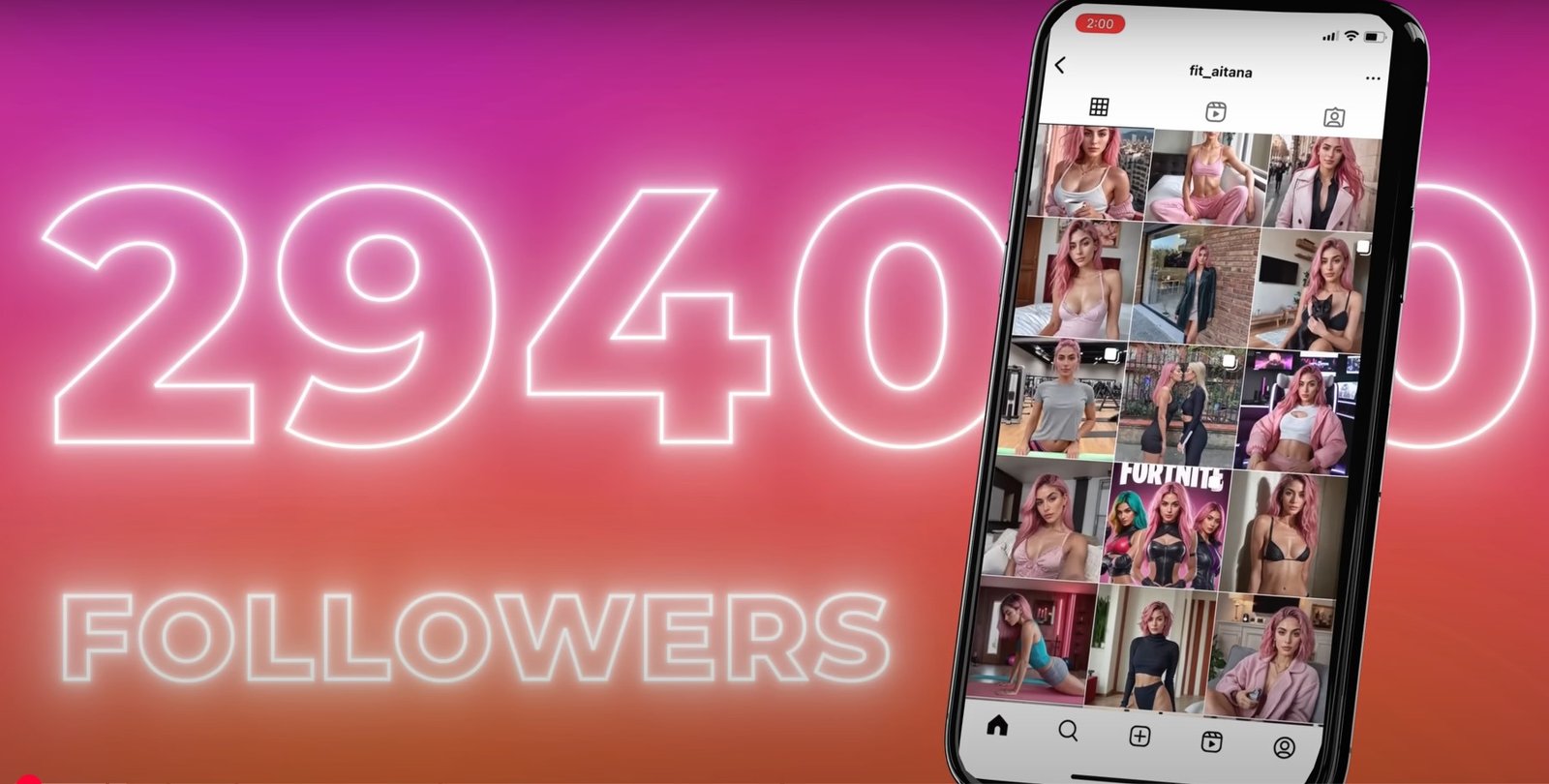
Creating a realistic AI influencer from scratch involves a fascinating blend of AI technologies and creative design. It’s a multi-step process that requires understanding various aspects of AI model generation, visual design, and persona development. Here’s a breakdown of how you might approach this, keeping in mind that the “realism” aspect is constantly evolving with advancements in AI:
Phase 1: Defining the AI Influencer’s Persona and Concept
- Establish the Niche and Target Audience:
- What kind of content will your AI influencer create? Fashion, gaming, lifestyle, education, etc.?
- Who is the target audience? Their demographics, interests, and online behavior will influence the influencer’s style and content.
- Develop the Personality and Backstory:
- Give your AI influencer a name, age (even if artificial), interests, values, and a unique backstory. This helps create a sense of character and relatability.
- Define their communication style, tone of voice, and how they interact with their audience.
- Design the Visual Appearance:
- Concept Art/Mood Boards: Create visual references for how your AI influencer will look. Consider their style, clothing, hair, and overall aesthetic.
- Physical Attributes: Decide on details like skin tone, eye color, facial features, and body type (if applicable).
Phase 2: Generating the AI Model (The Core of the Process)
This is the most technically demanding part and can be approached in several ways, with varying levels of complexity and realism:
- Utilizing Generative Adversarial Networks (GANs):
- How it works: GANs involve two neural networks: a Generator that creates images and a Discriminator that tries to distinguish between real and generated images. 1 Through training on a large dataset of real human faces and bodies (ethically sourced and potentially synthetic), the Generator learns to produce increasingly realistic outputs. 1. yourgpt.ai yourgpt.ai
- Tools and Platforms:
- StyleGAN (NVIDIA): Known for generating highly realistic and high-resolution faces. Requires significant computational resources and technical expertise to train or fine-tune.
- Artbreeder: A more user-friendly platform that uses GANs to allow users to create and blend portraits by adjusting various genetic sliders. While not fully “from scratch,” it offers a high degree of customization.
- RunwayML: A creative AI platform that provides accessible tools for generative AI, including image generation.
- DeepFaceLab: Primarily focused on face swapping but can be adapted for generating synthetic faces. Requires technical knowledge.
- Process:
- Dataset Collection (Ethical Considerations are Paramount): If training your own GAN, you’ll need a large, diverse, and ethically sourced dataset of human faces. Synthetic datasets are also emerging.
- Model Training: This requires significant computational power (GPUs) and time. You’ll need to configure and train the GAN architecture.
- Fine-tuning: Once a base model is trained, you can fine-tune it with specific features or styles to match your influencer’s design.
- Using 3D Modeling and Rendering with AI Assistance:
- How it works: Create a 3D model of your influencer using traditional 3D sculpting and modeling software (e.g., Blender, ZBrush, Maya). Then, utilize AI tools for realistic rendering, texturing, and even animation.
- AI Tools for 3D:
- AI Texture Generators (e.g., Materialize, online AI texture generators): Can create realistic surface textures.
- AI Rendering Software (emerging): May offer features to enhance realism in lighting and materials.
- AI Motion Capture and Animation Tools (e.g., DeepMotion): Can help animate your 3D model realistically.
- Process:
- 3D Model Creation: Sculpt and model the base geometry of your influencer.
- Texturing and Material Application: Use AI or traditional methods to create realistic skin, hair, and clothing textures.
- Rigging and Animation (if needed): Set up a skeletal structure and create animations for your model.
- Rendering: Use rendering software (potentially AI-assisted) to generate realistic images and videos.
- Hybrid Approaches:
- Combine elements of GAN-generated faces with 3D modeled bodies and clothing for more control over the overall look.
Phase 3: Creating Content and Interaction
- Generating Visual Content:
- Use your chosen AI model or 3D model to generate images and videos in various poses, outfits, and settings that align with your influencer’s niche and persona.
- Prompt Engineering (for GANs): Carefully craft text prompts to guide the AI in generating specific types of images.
- Scene Creation (for 3D): Design virtual environments and pose your 3D model within them.
- Developing AI for Interaction (More Advanced):
- Natural Language Processing (NLP) Models (e.g., GPT-3, LaMDA): To enable your AI influencer to understand and respond to text-based interactions (comments, messages).
- Voice Synthesis (Text-to-Speech): To give your influencer a voice for videos and voice messages.
- Emotion AI: To make interactions feel more natural by having the AI respond with appropriate emotional tones.
- Platforms and APIs:
- OpenAI API: For accessing powerful NLP models.
- Google Cloud AI Platform: Offers various AI services, including NLP and speech.
- Amazon AI: Provides similar AI services.
- Synthesia.io, Elai.io: Platforms that use AI to generate videos with realistic-looking avatars and AI-generated voiceovers from text.
- Process:
- Integrate AI APIs: Connect your AI influencer’s platform to NLP and voice synthesis APIs.
- Develop Interaction Logic: Define how the AI will respond to different types of input.
- Train and Fine-tune: You might need to fine-tune the AI models on data that aligns with your influencer’s persona.
- Managing the AI Influencer’s Online Presence:
- Create profiles on relevant social media platforms.
- Schedule and publish generated content.
- Monitor interactions and potentially use AI to respond (with human oversight, especially in the early stages).
Challenges and Considerations:
- Realism: Achieving true photorealism, especially in dynamic content (videos), is still an ongoing challenge.
- Computational Resources: Training and running sophisticated AI models require significant computing power.
- Ethical Implications:
- Transparency: Clearly disclose that the influencer is AI-generated.
- Bias in Data: Be mindful of biases in the training data that could lead to skewed or harmful outputs.
- Consent and Privacy: If using any real human data (even for training), ensure ethical sourcing and respect for privacy.
- Content Creation Workflow: Developing an efficient process for generating high-quality and engaging content is crucial.
- Maintaining Authenticity (Paradoxically): While being artificial, the influencer needs a consistent personality and style to connect with an audience.
In 2025 (Your Specified Timeframe):
We can expect further advancements in generative AI, making the creation of realistic AI influencers more accessible and the results even more convincing. Tools will likely become more user-friendly, and the ability to generate dynamic and interactive AI avatars will improve. However, the core principles of defining a strong persona, leveraging AI models for generation, and carefully managing the online presence will remain essential.
Creating a realistic AI influencer from scratch is a complex but increasingly feasible endeavor. It requires a blend of technical skills in AI and creative vision in crafting a compelling digital persona. Remember to approach this with ethical considerations at the forefront.